
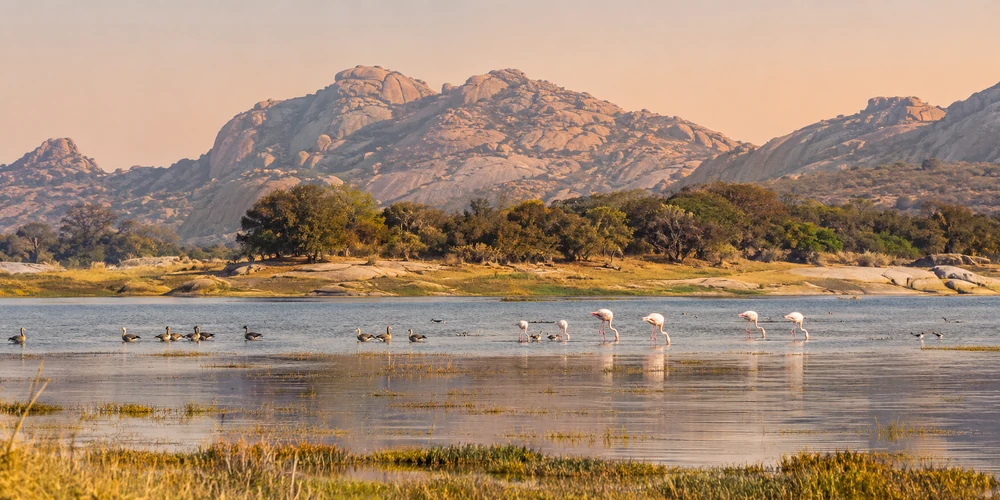
Jawai is widely known for its leopards and dramatic granite hills, but its birdlife offers another reason to slow down and explore. Around Jawai Bandh, the reservoir margins, scrub, open fields and rocky slopes create different habitats for birds. In the cooler months, resident species share the wider region with seasonal visitors, making winter a rewarding time to carry binoculars and spend a quiet morning outdoors.
You do not need to be an expert birder. Patience, a little preparation and respect for wildlife are enough to make a first outing enjoyable. This guide covers the best season, habitats to observe, beginner-friendly field tips and ways to watch birds without disturbing them.
Why Jawai is interesting for birdwatchers
Jawai brings several landscapes together. The reservoir and its margins provide aquatic and shoreline habitat; scrub and agricultural land support birds adapted to open country; and granite outcrops create perches and vantage points for birds of prey. Rather than searching for every species in one place, notice how different birds use different parts of the landscape.
Jawai Dam is recognised among Rajasthan’s important wetland landscapes. The Rajasthan Asian Waterbird Census 2026 summary explains the wider importance of the state’s wetlands and reservoirs for resident and migratory waterbirds. Its statewide species totals should not be mistaken for a count at Jawai alone. What is present at a particular water body changes with water levels, season, weather and survey effort.
That distinction matters: birdwatching in Jawai is an opportunity, not a guaranteed checklist. Treat each outing as a chance to observe what is naturally present that day.
When is the best time for birdwatching in Jawai?
Winter: October to March
The cooler months are generally the most appealing period for visitors interested in wetland birds. Seasonal waterbirds use suitable wetlands across Rajasthan, while resident species remain part of the landscape. Around Jawai, open water, shallow edges and surrounding scrub offer varied places to scan for ducks, geese, waders, herons and other water-associated birds.
November to February is a useful window if migratory birds are a priority, but arrival and departure dates are not fixed. Local conditions change from year to year, and a species recorded elsewhere in Rajasthan is not necessarily present at Jawai during your visit.
Summer: April to June
Summer brings higher temperatures and a different rhythm. Keep birdwatching to cooler periods, particularly early morning, and carry sufficient drinking water. Water availability can influence where birds gather, so the shoreline may look different from one visit to another. Avoid extending an outing during the hottest part of the day.
Monsoon: July to September
The monsoon can refresh the landscape and change water levels. It may be attractive for nature observation, but rain, muddy access and changing local conditions can affect plans. Check conditions locally and do not enter closed, flooded or unsafe areas.
What birds might you see?
Think in terms of habitats rather than a promised species list. Wetland birds in Rajasthan include groups such as ducks and geese, herons and egrets, storks, spoonbills, gulls, terns and shorebirds. Depending on local conditions and season, you may also notice kingfishers and other birds feeding along the water’s edge.
Scrub and open fields offer a different experience. Look for small ground-feeding birds, larks, bee-eaters, rollers and lapwings. Scan the sky and higher rocks for kites, eagles, harriers or falcons. These are possibilities to watch for, not guaranteed sightings.
Behaviour can help with identification. Notice a bird’s size, shape, bill, flight pattern, call and habitat. A wader probing soft mud, a kingfisher watching from a perch or a raptor circling above a ridge may be easier to recognise by what it is doing than by colour alone. If you are unsure, record a description instead of guessing.
Where to focus your attention
Reservoir edges and shallow water
Scan the water before moving closer. Shallow margins can attract feeding birds, while swimming species may remain farther from shore. Binoculars let you observe without approaching. Avoid walking onto soft banks or entering the waterline for a photograph.
Wetland inlets and vegetated margins
Where water meets reeds, grasses or low vegetation, watch quietly for birds feeding or resting. These areas can be sensitive, particularly when birds are nesting or gathered in groups. Do not push through vegetation or flush birds into view.
Scrub, fields and village surroundings
Move slowly and listen. Small birds can be heard before they are seen. Bushes, field edges and open ground may all provide useful observation points. Remember that these are working rural landscapes: give livestock, residents and agricultural activity plenty of space.
Granite hills and open sky
Scan prominent rocks and the air above the ridgelines for perched or soaring birds. A wide view is often more useful than repeatedly searching one small patch.
Plan a beginner-friendly birdwatching morning
Keep your first outing simple. Start early, when temperatures are comfortable and the light is gentle. Allow time to stop and observe instead of trying to cover as much ground as possible. If you are unfamiliar with the area, ask your accommodation or a knowledgeable local guide about suitable access, current conditions and places where observation is permitted.
Choose one or two habitat types for the morning. You might begin by scanning a wetland edge and then look across nearby scrub or open country. The aim is not to collect the largest number of sightings; it is to understand how the landscape changes and how birds use it.
Make short notes about the time, habitat and weather. A photograph taken from a respectful distance may help with later identification, but do not pursue a bird for a clearer image. Keep expectations flexible: even a quiet morning can teach you something about Jawai’s habitats.
What should you carry?
- Binoculars: A basic pair makes distant birds easier to observe while keeping a respectful distance.
- Water and sun protection: Carry drinking water, a hat, sunglasses and sunscreen.
- Comfortable clothing: Choose practical clothing suited to the weather and open landscape.
- Notebook or bird guide: Record observations and identify species later without rushing.
- Camera, if needed: Use a suitable lens and do not approach wildlife for a photograph.
- Charged phone: Keep it available for navigation and emergencies, but do not rely on mobile coverage everywhere.
Responsible birdwatching rules
Good birdwatching leaves the habitat as undisturbed as possible. Keep a generous distance from birds, nests and roosting groups. Never chase, corner, handle or feed wildlife. Avoid playing recorded calls to attract birds, and keep voices and vehicle noise low.
Stay on permitted routes and follow local guidance. Do not drive off established tracks, block village roads or enter private land without permission. Take litter with you. Be particularly careful around water: never assume a shoreline is safe for walking or wading, and keep children under close supervision.
Respect the people who live and work in the area as well. Ask before photographing residents, homes or private activities. Jawai is a lived-in landscape, not an open-air viewing enclosure.
Can you combine birdwatching with a leopard safari?
Yes, birdwatching can complement a wider Jawai wildlife visit, but the experiences have different rhythms. A leopard-focused outing is organised around locating and observing a mammal; birdwatching often involves slower movement, scanning several habitats and noticing smaller details. If you want to do both, discuss the plan with your local operator or accommodation in advance rather than assuming one safari will cover every interest.
Keep expectations realistic. Leopards and birds are wild animals, and sightings depend on natural behaviour and conditions. Choose an operator who prioritises safe distances, follows local guidance and does not pressure wildlife for photographs.
Make time to notice more than the headline sighting
For many visitors, Jawai begins with its dramatic hills and leopard country. Birdwatching offers another way to understand the region: movement on the water, calls from scrub, a raptor above a ridge and the changing character of the landscape through the seasons. Plan a quiet morning, carry binoculars, listen carefully and allow the birds to set the pace. A long checklist is not essential; a deeper appreciation of the place is a worthwhile result.
Frequently asked questions
What is the best month for birdwatching in Jawai?
The cooler months, broadly October to March, are a good period to plan for wetland birdwatching. November to February can be appealing for seasonal visitors, but sightings vary with local conditions.
Do I need experience to go birdwatching in Jawai?
No. Beginners can enjoy birdwatching with binoculars, patience and a willingness to observe. A local naturalist or knowledgeable guide can help with identification and suitable viewing areas.
Can I see migratory birds at Jawai Bandh?
Jawai’s reservoir landscape forms part of Rajasthan’s wider wetland network. Which birds are present during a particular visit depends on season, water conditions and natural movement.
What is the best time of day for birdwatching?
Early morning is a practical choice because it is usually cooler and offers soft light. Late afternoon can also be worthwhile when temperatures ease.
Should I bring a camera or binoculars?
If choosing one, binoculars are often more useful for learning to observe birds. A camera is optional; use it from a distance.
Is birdwatching in Jawai suitable for children?
It can be a rewarding family activity when planned around children’s comfort and safety. Supervise them closely, keep them away from unsafe water edges and encourage quiet observation.