
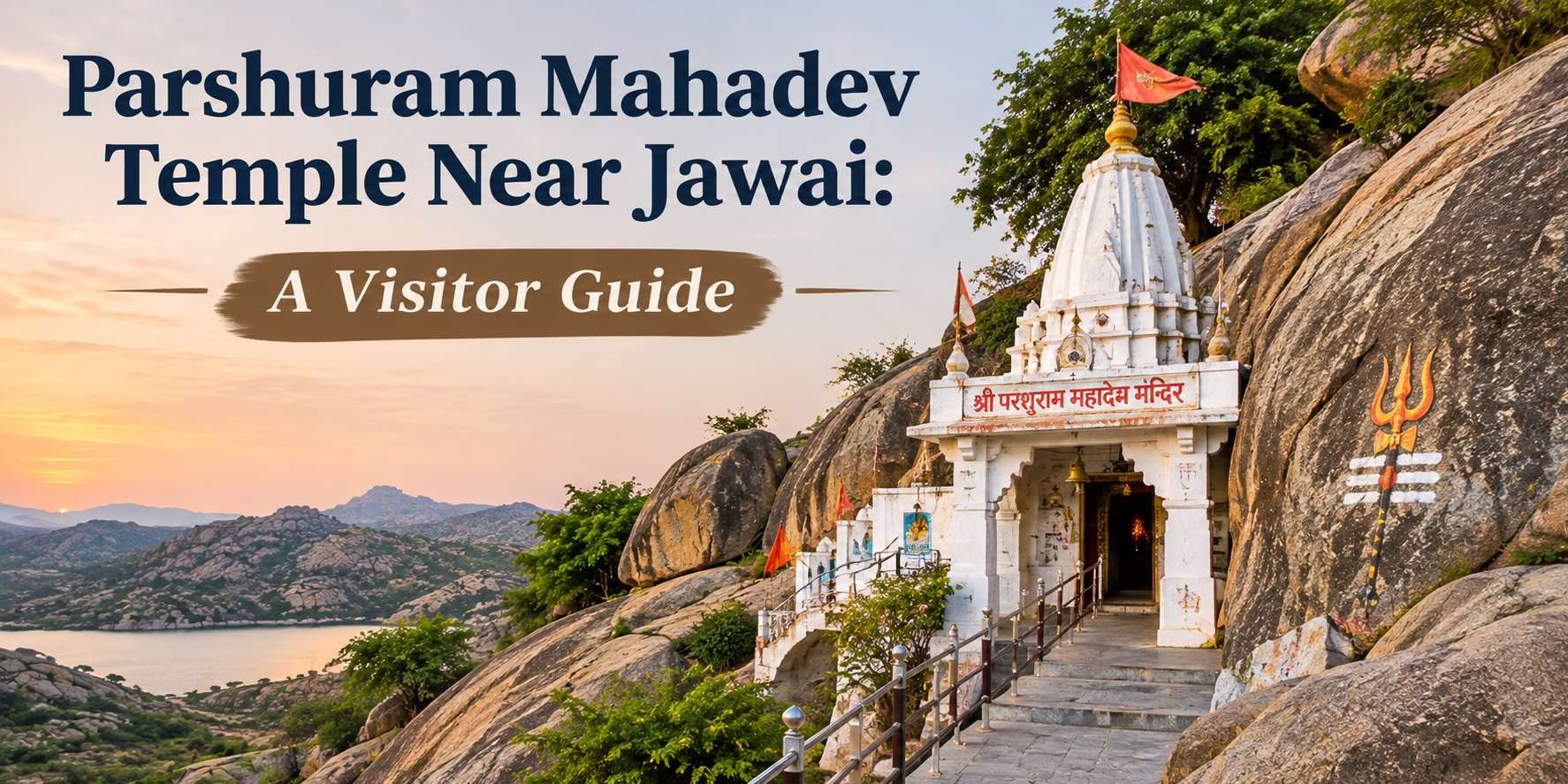
Jawai is best known for its leopard safaris, granite hills and reservoir, but the wider Pali–Rajsamand landscape has quieter heritage stops too. One is Parshuram Mahadev Temple, a cave shrine dedicated to Lord Shiva in the Aravalli hills. It offers a different outing from a safari: a sacred cave, a rocky hillside setting and a stepped approach rather than a wildlife drive.
If you are staying around Bera or Jawai Bandh, consider it as a separate regional excursion, provided you have enough time and are comfortable with steps and uneven ground. Here is what to know before leaving your lodge.
Where is Parshuram Mahadev Temple?
The temple is set in the Aravalli hill country around the Pali–Rajsamand border in southern Rajasthan. Rajasthan Tourism lists it among Pali’s pilgrimage attractions and describes it as a cave temple dedicated to Lord Shiva, situated at more than 3,990 feet above sea level. The landscape is different from the open reservoir edge around Jawai, with hill slopes, rocky ground and wooded patches.
The name is also written as Parashuram Mahadev. The main cave shrine and lower approach are sometimes described under different district references, so do not rely on a vague map search for “Parshuram temple”. Ask your accommodation to confirm the exact approach road and parking point for your visit date.
The story and significance of the cave shrine
The temple is associated with a local religious tradition about Parshuram, an avatar of Lord Vishnu. According to the legend recorded by Rajasthan Tourism, Parshuram carved the cave with his axe and worshipped Lord Shiva there. The state tourism description also mentions naturally formed figures associated with Lord Ganesha and Lord Shiva inside the cave. These are matters of faith and local tradition, not a substitute for a dated archaeological record.
For devotees, the appeal is the sacred cave and the act of reaching it. For other travellers, the setting offers a chance to understand a living place of worship in the Aravallis. People may be praying, making offerings or attending a local observance, so the atmosphere can differ between a quiet weekday and a festival period.
What to expect on the approach
Plan for steps and uneven surfaces rather than a level, fully accessible monument visit. Travel references commonly describe a long stepped approach, often quoted at around 500 steps, but the exact route and condition can change. Treat that number as an indication of effort, not a guaranteed count. Confirm the current approach locally, especially after heavy rain or repair work.
Wear shoes with a firm grip for the approach and carry drinking water. You may need to remove footwear before entering the sacred area, so choose footwear that is easy to take off and put back on. Keep one hand free on steeper sections, avoid rushing and allow time for rest stops. Stone can become slippery in wet weather and exposed sections can feel hot in summer.
This is not an outing to squeeze between two tightly timed safari drives. Build in a generous travel and visit window. If you are travelling with older relatives, young children or anyone who finds stairs difficult, assess the physical demands honestly before setting out. There is no need to turn a spiritual visit into an uncomfortable challenge.
How to plan the visit from Jawai
“Jawai” covers a broad stay area rather than one precise starting point. Bera, Jawai Bandh, nearby villages and individual lodges can sit on different sides of the local road network. A single distance or drive time can therefore be misleading. Enter your actual lodge or village as the starting point in a live map, then ask your driver or host to confirm the final approach to the temple. A route estimate from Jawai Bandh may not match the journey from Bera.
A private vehicle with a local driver is usually the most practical option for a flexible visit. Public transport may take you towards larger settlements, but the final leg and approach point need to be checked locally. Do not assume a bus or train will take you directly to the cave. If arriving by rail, arrange onward transport before travelling.
Before leaving, confirm the road and parking point currently being used, whether an event or maintenance is affecting access, and the day’s visiting arrangements. Public online sources do not provide a consistently verified live timetable for the cave, so this guide does not promise fixed opening or closing hours. Ask locally, particularly during Shravan, Mahashivratri or other busy religious dates.
Best season and weather considerations
The cooler months from roughly October to March are generally more comfortable for walking than peak summer. Mornings can be pleasant in winter, but check the day’s access arrangements before starting. During April, May and June, heat can make an exposed climb tiring; carry enough water and avoid treating the visit as a casual midday detour.
The monsoon changes the character of the Aravallis. Slopes become greener, but wet steps, runoff and slippery rock increase the risk of a fall. Heavy rain can also affect approach roads. Ask about the condition of the steps and road on that specific day, and postpone the outing if local advice is that the route is unsafe.
Festival periods can bring more devotees and traffic around the approach. This may be meaningful if you are travelling for the religious occasion, but it is not necessarily the quietest time for a first visit. Confirm dates from a reliable local source rather than assuming a festival falls on the same Gregorian date every year.
Temple etiquette and responsible travel
Parshuram Mahadev is a place of worship first and a sightseeing stop second. Dress modestly, follow signs and instructions from temple staff, and keep conversations quiet near prayer areas. Ask before taking photographs, especially inside the cave or near people performing rituals. If photography is restricted, respect that rule.
Do not leave plastic bottles or food wrappers along the steps. Carry your rubbish back to a proper bin, avoid loud music and do not disturb animals or plants around the hillside. Stay on the recognised path instead of climbing over rocks for a photograph. If a local guide or caretaker gives route advice, follow it; they know the day’s conditions better than a generic travel listing.
Can you combine it with a Jawai safari?
It is better to plan the temple as a separate half-day or day excursion than to assume it will fit neatly around a safari. Jawai drives are commonly arranged around dawn and late afternoon, while a hill visit needs travel time and an unhurried approach. Speak to your lodge before confirming the schedule, and keep recovery time between the climb and a safari, particularly in hot weather.
There is no need to expect a leopard sighting at the temple. Wildlife belongs to the wider landscape, but this is a pilgrimage visit and should be approached on its own terms. Keep the focus on the shrine, the hill setting and the local story rather than trying to turn every stop into a safari opportunity.
A thoughtful addition to a Jawai itinerary
Parshuram Mahadev Temple adds a cultural and spiritual dimension to a stay in the Jawai region. Its cave setting, Aravalli location and local legend make it distinct from the reservoir, village and wildlife experiences usually associated with Bera. The best preparation is straightforward: confirm the exact route and access on the day, understand that the approach involves steps, carry water and allow more time than a quick map estimate suggests.
For an overview of the region’s landscape and local context, read About Explore Jawai. If you have a verified update about access or road conditions, share it through the Explore Jawai contact page.
Frequently asked questions
Is Parshuram Mahadev Temple near Jawai?
It is a regional excursion from the Jawai–Bera area, in the Aravalli hills around the Pali–Rajsamand border. The exact drive depends on your lodge or village, so check a live route from your actual starting point.
What is Parshuram Mahadev Temple known for?
It is a cave shrine dedicated to Lord Shiva. Rajasthan Tourism records the local tradition connecting the cave with Parshuram and mentions naturally formed figures associated with Shiva and Ganesha.
Does the temple involve a climb?
Yes. Visitors should expect steps and uneven ground. Some travel references quote around 500 steps, but the route and condition can vary; confirm the current approach locally.
What is the best time to visit?
Cooler months are generally more comfortable for walking. During the monsoon, the hills are greener but steps and rock can be slippery. In summer, heat makes an exposed climb more demanding.
Are the opening hours fixed?
A consistently verified live timetable was not available from the official sources checked for this guide. Confirm the day’s access and any festival arrangements with a local contact before leaving Jawai.