
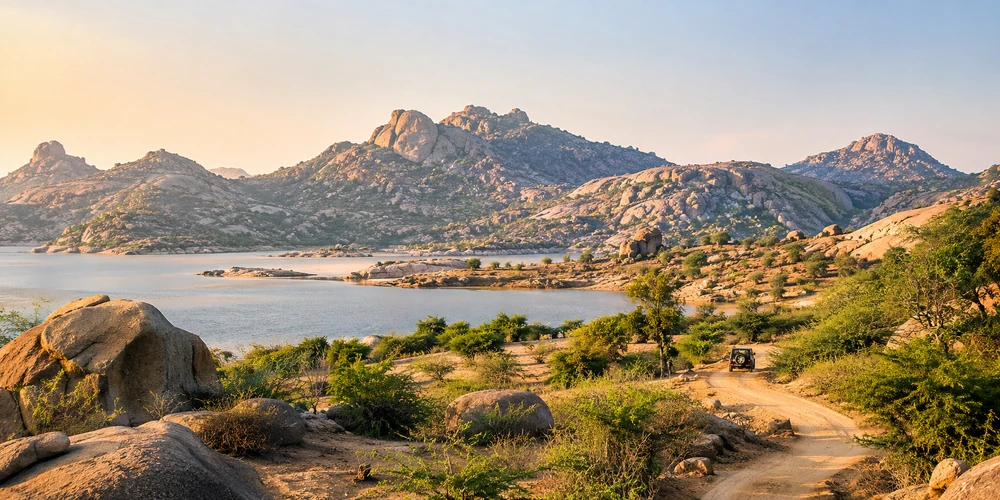
A two-night stay is a practical way to discover Jawai without turning the visit into a rushed checklist. It gives you time for a morning or evening wildlife drive, a slower look at the landscape around Jawai Bandh, and an opportunity to understand the villages and everyday life that make this part of Rajasthan distinctive. The key is to plan around the rhythm of the place rather than trying to fit every activity into one day.
Jawai is in Rajasthan’s Pali district, where granite hills, scrubland, water bodies and villages sit close together. It is known for its leopard habitat, but a rewarding trip is about more than a sighting. The landscape, birdlife, local knowledge and quiet hours between activities are all part of the experience. Here is a flexible itinerary for first-time visitors.
Before you travel: decide what kind of Jawai trip you want
Start by deciding what matters most to you. Wildlife enthusiasts may want to prioritise guided drives at suitable times. Couples may prefer a relaxed stay with one planned activity each morning and evening. Families may appreciate a slower schedule with time to rest between outings. Birdwatchers and photographers may want to keep space in the itinerary for the reservoir and changing light.
Choose accommodation after checking its location, what is included in the stay, and whether activities or transfers need to be arranged separately. Ask the property to explain the safari arrangements, vehicle type, duration, inclusions, meeting point and cancellation terms before confirming. Prices and operating arrangements can vary, so get the current details directly from the provider rather than relying on old online estimates.
Day 1: Arrive, settle in and ease into the landscape
Afternoon: reach Jawai and check in
Try to arrive with enough daylight to settle in comfortably. If you are travelling by road, allow a buffer for breaks and changing traffic conditions. If you are arriving by train, confirm the pickup point and transfer in advance; do not assume that a station transfer is automatically included in your accommodation booking.
After check-in, keep the first few hours unhurried. Have a meal, speak with your host or local guide, and get a clear understanding of the area around your stay. Ask which activities are suitable for your dates and what clothing or essentials you should carry. A short orientation can help you understand the terrain and avoid spending valuable time making last-minute arrangements.
Late afternoon: take in the rocky scenery
If time and local conditions allow, choose a gentle landscape outing rather than packing in a second major activity. Jawai’s granite formations are a defining part of the region. Their shapes, crevices and changing colours create a striking contrast with open scrub and cultivated land. A viewpoint or guided drive can help you appreciate the scale of the landscape, but use authorised access routes and follow your guide’s instructions.
As the light softens, enjoy the view without expecting wildlife to appear on cue. Leopards are wild animals, and no responsible guide can guarantee a sighting. Keep a respectful distance, avoid loud calls or sudden movement, and never ask anyone to approach or disturb an animal for a photograph.
Evening: enjoy a relaxed first night
Return to your accommodation, have dinner and rest. If the sky is clear, spend a little time outdoors and enjoy the quieter atmosphere. The first evening is also a good opportunity to confirm the next morning’s departure time, pickup location and what to carry.
Day 2: Make room for wildlife, water and local context
Early morning: choose a guided wildlife drive
For many visitors, a guided leopard safari is a highlight of Jawai. The experience takes place in a lived-in landscape of rocky hills, fields and villages rather than a conventional fenced safari setting. Local guides bring knowledge of tracks, terrain and recent activity, but wildlife movement remains unpredictable.
Before setting out, listen carefully to the safety briefing. Stay inside the vehicle unless the guide says it is safe and permitted to do otherwise. Do not feed animals, use flash if it may disturb them, block their path or pressure a driver to get closer. Keep voices low and remember that the landscape is also home to residents, livestock and other wildlife.
After the drive, return for breakfast and allow time to rest. An early start can be tiring, especially after a long journey, so avoid scheduling a demanding excursion immediately afterwards.
Late morning: explore the Jawai Bandh landscape
Set aside part of the day for the water and open views around Jawai Bandh. The reservoir adds another dimension to the region’s rocky scenery and can be especially interesting for people who enjoy landscape photography or observing birds. What you see changes with season, water conditions and the time of day. Take binoculars if you have them, and use a guide who can help identify birds without disturbing them.
Keep to safe, accessible areas and do not enter restricted water, dam infrastructure or private land. Avoid leaving litter, and do not attempt to approach crocodiles or other wildlife along the shoreline. If a particular access point is closed or unsuitable, follow local advice and choose another permitted viewpoint.
Afternoon: take a slower cultural or village experience
Jawai is not an empty wilderness. Villages, pastoral livelihoods and local communities are part of the landscape. If you are interested in learning about local life, ask your accommodation to arrange a respectful, community-led visit with a knowledgeable local host. A good visit should be based on consent, clear expectations and fair payment for the people sharing their time and knowledge.
Be considerate when taking photographs. Ask permission before photographing residents, homes, children, livestock or religious spaces. Do not treat a village as a set for staged pictures. Listen, ask thoughtful questions and accept that some places or conversations may be private. These small choices help make cultural tourism more respectful and meaningful.
Late afternoon: keep the second wildlife window flexible
If you want another guided drive, use the late afternoon for it, subject to local arrangements and conditions. A second outing gives you another chance to observe the terrain and wildlife behaviour, but it should not be treated as a guarantee of a leopard sighting. If you would rather slow down, enjoy the view from your accommodation or spend time reviewing photographs from the day.
Day 3: Enjoy a calm morning and depart
On your final morning, avoid planning an activity that risks making you late for a train or road transfer. If your schedule and local arrangements allow, enjoy breakfast with a view or take a short, permitted walk around your property. Check out on time, confirm your transport and keep some flexibility for the return journey.
If you have a late departure and want one more experience, ask locally what is practical. Do not assume that every safari, viewpoint or village visit is available every day. The best final morning is one that fits your transport plan without unnecessary rushing.
How to reach Jawai and plan your transfers
Jawai can be approached by road or rail, while visitors arriving by air generally need a road transfer from a regional airport. The most suitable route depends on your starting city, current train and flight schedules, road conditions and the exact location of your accommodation. Jawai Bandh, Mori Bera and Falna are railway options used by travellers to the wider region, but confirm the station that best matches your stay before booking tickets.
Do not rely on a single distance figure copied from an old itinerary. Different properties may describe their location as Jawai even when they are closer to a particular village or railway station. Ask your accommodation for the recommended arrival point, approximate transfer time for your date and whether pickup is available. Confirm all transport arrangements directly.
What to pack for a two-night Jawai stay
Pack comfortable neutral-coloured clothing, sturdy footwear, sun protection, a reusable water bottle and any personal medication you need. Early mornings and evenings can feel cooler than the afternoon, so a light layer is useful in cooler months. Carry binoculars if birdwatching interests you, and bring a camera only if you are comfortable using it without disturbing wildlife or residents.
A small day bag is usually enough for an outing. Keep your phone charged, follow your guide’s instructions about connectivity and safety, and take back all wrappers and waste. If you are visiting during a warmer period, ask your accommodation about the conditions expected during your dates and plan outdoor activities accordingly.
When is two nights enough?
Two nights suit travellers who want an introduction to Jawai, a guided wildlife experience and some time to appreciate the reservoir and local landscape. It is not enough to explore every nearby village or attraction in depth. If you prefer slow travel, are travelling with young children, want multiple wildlife drives, or plan to include wider regional excursions, consider adding another night.
Season also affects the feel of the visit. Cooler months are often more comfortable for outdoor activities, while other seasons bring different colours and conditions to the landscape. Check the weather forecast and confirm current activity arrangements before you travel. Avoid choosing dates solely on the promise of a wildlife sighting.
Common planning mistakes to avoid
The most common mistake is trying to do too much. Long transfers, early starts and outdoor activities can make a short break tiring if every hour is booked. Another mistake is assuming that a safari is a guaranteed leopard encounter. Choose a responsible operator, understand what is included and approach the drive as time spent in a natural landscape.
It is also worth confirming accommodation inclusions in writing. Check meals, transfers, activity costs, taxes, check-in and check-out times, and cancellation terms. Finally, leave room for the unexpected: a change in weather, a delayed transfer or simply a beautiful view worth enjoying for longer.
Make your Jawai trip about more than a checklist
A well-planned two-night Jawai trip balances a guided wildlife experience with time to understand the land around it. Start with a comfortable arrival, give yourself space to enjoy the rocky hills and Jawai Bandh, and approach local culture with curiosity and respect. With realistic expectations and a flexible schedule, even a short stay can offer a meaningful introduction to this distinctive part of Rajasthan.
Frequently asked questions
Is two nights enough for Jawai?
Two nights are enough for a first visit that includes a guided wildlife drive, time around Jawai Bandh and a relaxed look at the surrounding landscape. Add another night if you want a slower pace or more activities.
How many safaris should I plan in Jawai?
One guided drive can introduce you to the landscape. Some visitors choose a second drive for another opportunity to observe wildlife in different conditions. Sightings are never guaranteed, so plan for the experience rather than a promised encounter.
Can I visit Jawai Bandh without going on a leopard safari?
Yes. You can focus on the reservoir landscape, birdwatching from suitable areas, scenery and locally arranged cultural experiences. Follow access rules and local guidance around water and wildlife areas.
Which railway station should I use for Jawai?
Jawai Bandh, Mori Bera and Falna are railway options for the wider region. The best choice depends on your accommodation and available train services. Confirm the recommended station and pickup before booking.
What should I confirm before booking accommodation?
Ask about the exact location, meals, transfers, activity inclusions, safari arrangements, vehicle details, cancellation policy and any additional charges. Get current details directly from the property.